
What to Do After a Tree Falls (7 Steps)
If a tree falls or a large branch breaks during bad weather, move people away, avoid downed power lines, check for immediate hazards, and call emergency services when necessary. Then contact a qualified emergency tree service to inspect, secure, and remove the damaged tree safely before attempting cleanup yourself.
What should you do first after a tree falls?
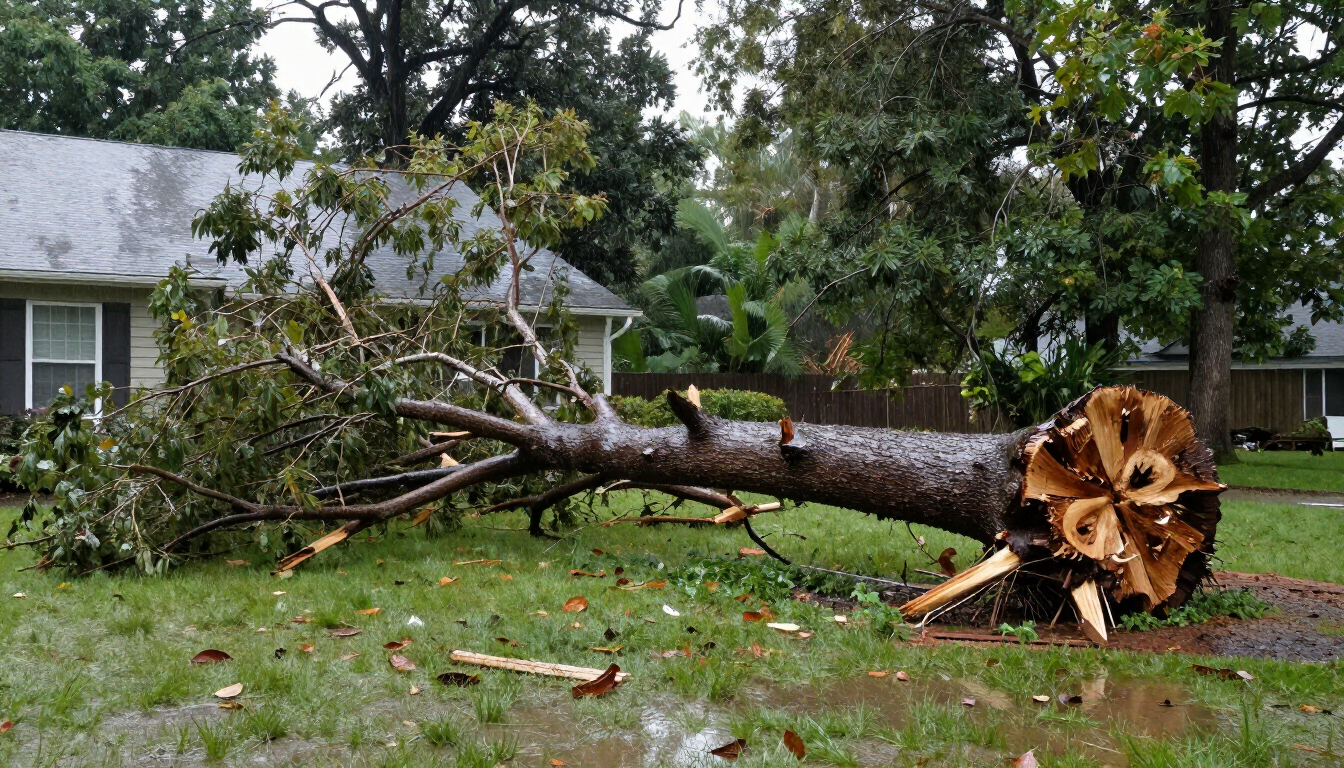
Your first priority is safety—not cleanup. Storm-damaged trees can shift without warning, conceal broken limbs, damage structures, or contact electrical wires. Keep everyone, including children and pets, away from the area until the hazards have been assessed.
Follow these immediate steps:
- Move to a safe location. Stay clear of the fallen tree, hanging branches, damaged fences, and unstable structures.
- Look for downed power lines. Treat every wire as live. Do not touch the tree, branches, vehicles, or anything else that may be in contact with a line.
- Call 911 if there is an immediate danger. Report injuries, fires, blocked public roads, gas leaks, or electrical hazards.
- Contact the utility company when needed. The utility provider must make electrical lines safe before tree professionals can work nearby.
- Call a qualified emergency tree service. A professional can determine whether the tree should be removed, stabilized, or carefully dismantled.
If the tree has fallen into a road or is threatening your home, use Woodland Tree Service’s 24/7 Emergency Tree Service page to request help.
Is it safe to cut up a fallen tree yourself?
Usually, no. A fallen tree may be under extreme tension, with branches or sections ready to spring, roll, or collapse. Chainsaw work becomes especially dangerous when the trunk is supported unevenly, pinned against another tree, resting on a structure, or tangled with fencing.
Homeowners should not attempt to cut a storm-damaged tree when:
- The tree is touching or near a power line.
- The trunk is split, suspended, or under visible tension.
- Large limbs are hanging overhead.
- The tree has landed on a roof, vehicle, deck, fence, or other structure.
- You do not have professional equipment, training, and protective gear.
Even a tree that appears to be lying flat may contain stored energy. Cutting in the wrong location can cause the trunk to roll or release suddenly. Professional tree workers use controlled cutting techniques, rigging systems, and equipment designed for hazardous removals.
How do you handle a tree that is touching a power line?
Stay away and call the utility company immediately. Do not approach the tree, climb it, move branches, operate a chainsaw, or use a ladder near the area. Water, wet soil, metal fencing, and nearby vehicles can also create serious electrical risks.
Keep people and pets well away from the hazard and warn neighbors if necessary. Tree removal should begin only after the utility company has disconnected, isolated, or otherwise secured the electrical system. A tree professional can then coordinate the removal safely.
Never assume a line is inactive because there are no sparks or sounds. Some energized lines are difficult to see, especially during rain, darkness, or heavy debris.
What if the fallen tree damaged my house or another structure?
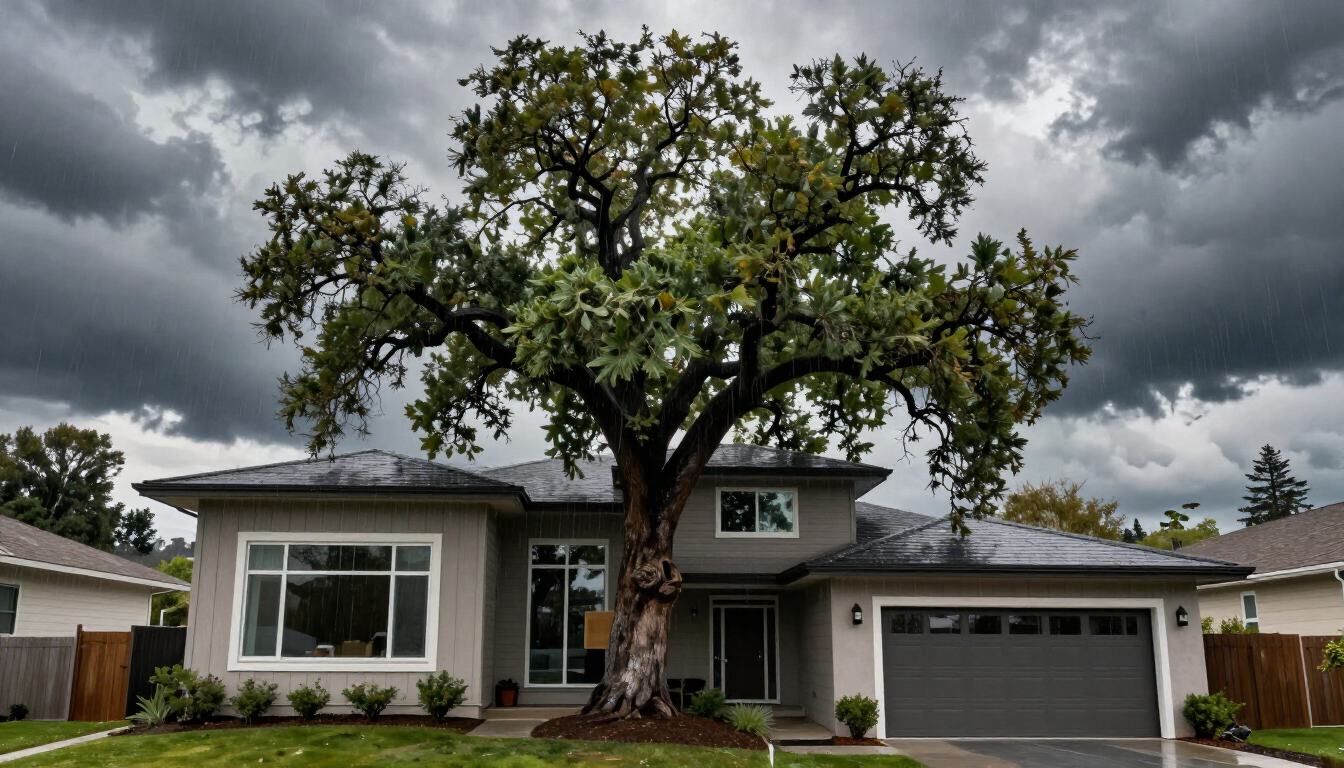
If a tree has struck your home, garage, shed, vehicle, or another structure, leave the area if there is a risk of collapse. Look for damaged gas lines, exposed wiring, broken windows, roof instability, and water entering the building. Call 911 for urgent threats, then contact your insurance company and a professional tree service.
Take photographs from a safe distance before cleanup if your insurer permits it. Record the date, approximate time, location, and visible damage. Avoid moving debris unless it is necessary to prevent immediate injury or additional damage.
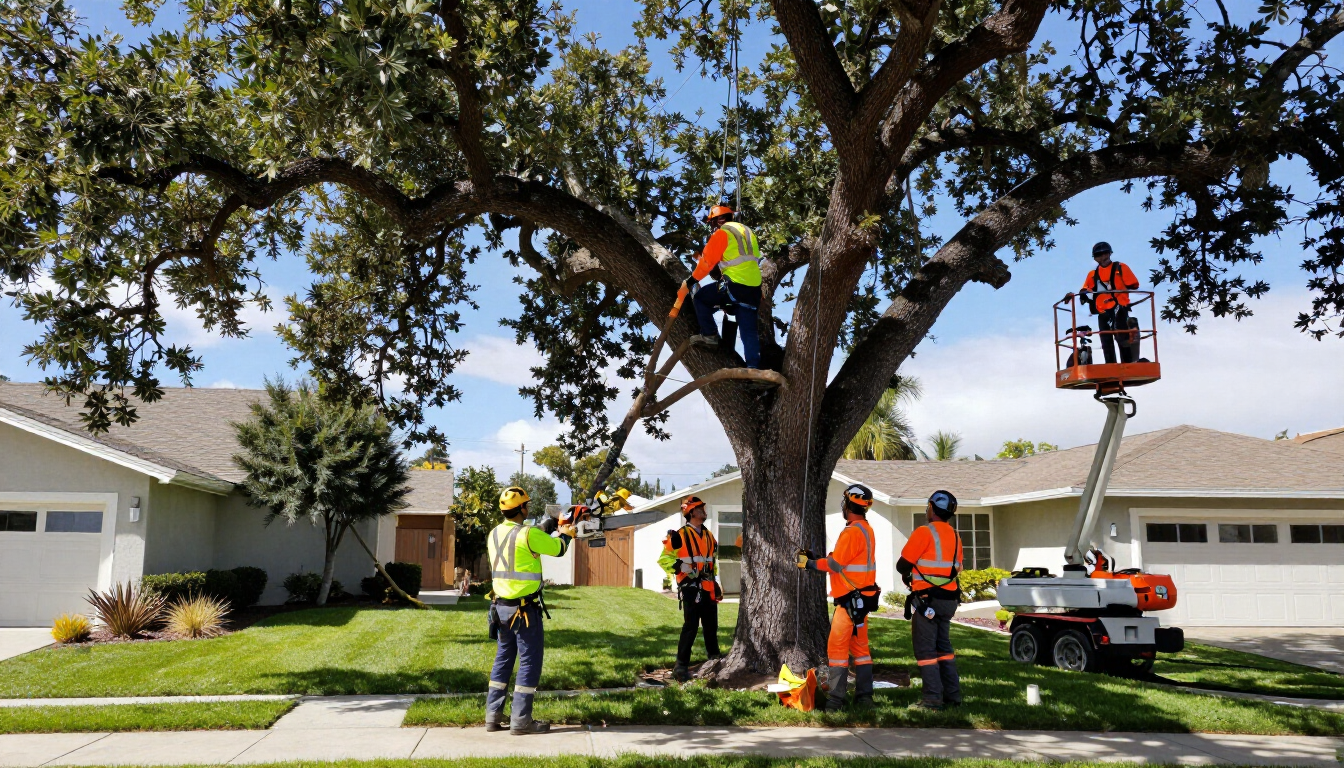
A tree service may be able to remove the tree in sections, temporarily reduce the weight on a roof, or stabilize a hazardous limb. Ask whether the company is licensed and insured, and request a written description of the recommended work.
For extensive structural damage, coordinate the tree contractor with your roofer, general contractor, or emergency restoration provider. Removing the tree is only one part of restoring the property.
How do you decide whether a storm-damaged tree should be removed?
A professional inspection should consider the tree’s condition, location, root stability, trunk damage, remaining limbs, and likelihood of failure. Not every damaged tree requires complete removal. In some cases, pruning, cabling, bracing, or monitoring may be appropriate.
Removal is more likely when the tree has:
- A major split in the trunk or primary branches.
- Uprooted or significantly lifted roots.
- A large broken limb that cannot be safely reduced.
- Severe lean toward a home, road, driveway, or utility line.
- Extensive decay or structural damage exposed by the storm.
- Damage that makes future failure likely despite pruning.
A qualified arborist or tree professional should explain the condition and available options. If removal is recommended, Tree Removal services can address the hazard while protecting nearby structures and landscaping.
What should you do about broken branches that remain in the tree?
Do not pull, throw, or cut hanging branches from the ground unless a trained professional has confirmed that the work is safe. A broken limb can remain attached by fibers and may fall later as wind, rain, or vibration changes its position.
Look from a safe location for:
- Hanging or partially detached branches.
- Fresh cracks in major limbs.
- Large dead branches exposed by the storm.
- New leaning or movement in the canopy.
- Broken branches resting on other limbs.
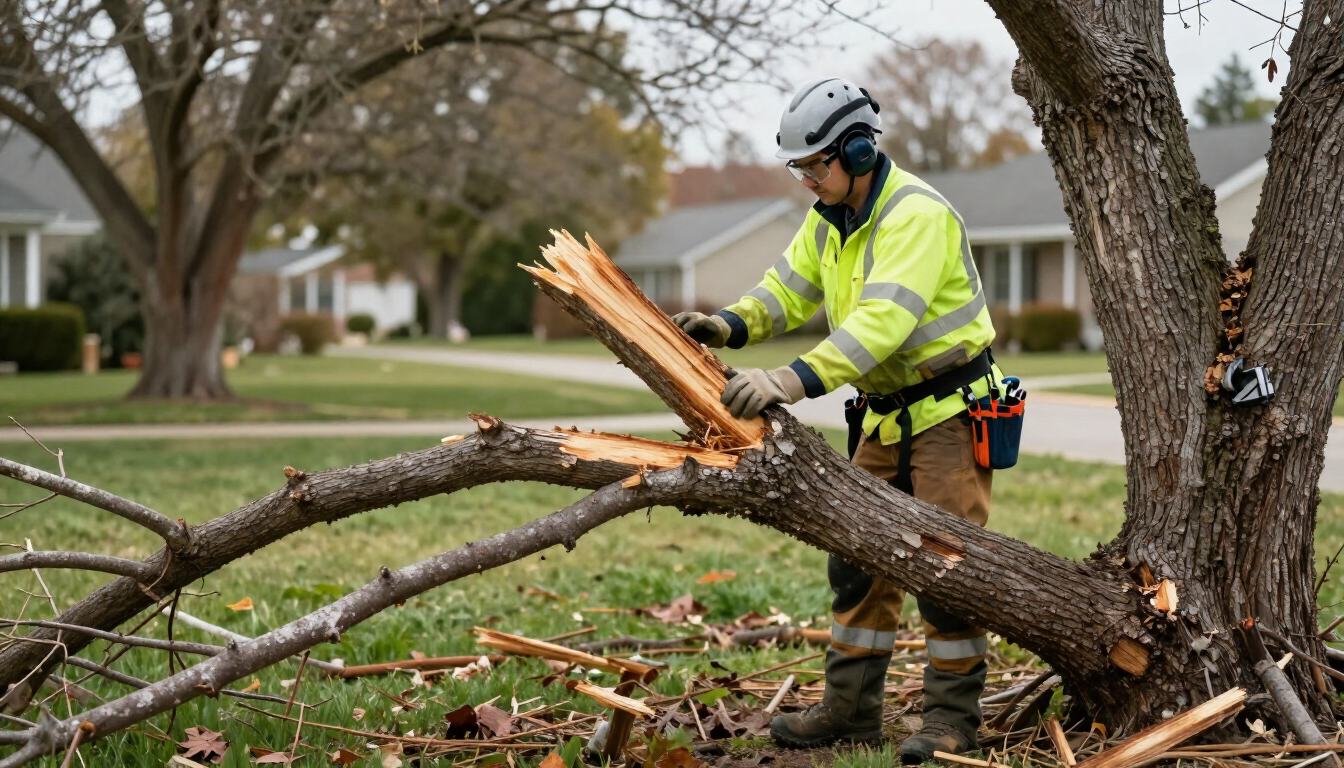
Keep the area below the damaged canopy clear. Professional Tree Trimming can remove compromised limbs using controlled methods and can identify additional structural issues that may not be obvious from the ground.
What information should you give an emergency tree service?
Clear information helps a tree company determine the urgency, equipment, and crew required. When you call, provide:
- Your address and the tree’s exact location on the property.
- Whether anyone is injured or trapped.
- Whether the tree is touching a structure, vehicle, road, or power line.
- The approximate tree size and whether the trunk is split or uprooted.
- Photos or video taken from a safe distance, if available.
Tell the company if access is blocked, the yard is saturated, or the tree is near a pool, fence, irrigation system, or other obstacle. Do not enter an unsafe area just to collect more details.
Woodland Tree Service Inc. serves Woodland, Davis, Winters, Yolo County, and the Sacramento area. The company is licensed under #1117314, fully insured, and led by Denis, who remains involved in each project.
How can you protect your property while waiting for help?
After the immediate hazard has been reported, take only low-risk steps. Move people and pets indoors or to another safe area. If water is entering the home, place containers beneath safe interior leaks and avoid wet electrical equipment. Do not climb onto the roof or use a ladder near damaged branches.
If it is safe to do so, you can:
- Keep driveways and walkways closed beneath unstable limbs.
- Mark the hazard so visitors do not approach it.
- Move portable items away from the edge of the danger zone.
- Take photos for insurance documentation.
- Keep utility, insurance, and tree-service contact information available.
Do not cover a large trunk with a tarp, pull a tree with a vehicle, or use heavy equipment unless directed by a qualified professional. Improvised removal can worsen property damage and create a second emergency.
Storm cleanup and wood disposal
Once the tree has been made safe, ask what is included in the service estimate. Storm cleanup may involve cutting and removing the tree, hauling brush, chipping smaller limbs, cutting logs into manageable sections, raking debris, or grinding the remaining stump.
Stump removal is often a separate service. A stump left near a walkway, driveway, or lawn can remain an obstacle and may interfere with future landscaping. Learn more about Stump Grinding if the tree has been removed but the stump remains.
Before work begins, clarify:
- Whether debris hauling is included.
- Whether the estimate includes cleanup and raking.
- Whether stump grinding is included or priced separately.
- How logs or firewood will be handled.
- Whether additional work could change the quoted price.
Avoid burning storm debris unless local authorities permit it and conditions are safe. Wet wood, hidden nails, and treated lumber can create additional hazards.
What can homeowners do before the next storm?
Preventative care cannot stop every tree failure, but regular inspections can identify defects before severe weather exposes them. Watch for dead branches, cavities, mushrooms near the base, lifted soil, cracks, weak branch unions, and changes in lean.
Schedule a professional assessment when a mature tree is close to a home, driveway, play area, or utility line. Proper pruning can reduce weak or overextended growth, while routine maintenance can make future inspections easier.
Woodland homeowners can explore the Preventative Care Package or review the company’s broader tree services to plan seasonal maintenance. Preventative work is generally safer and easier to schedule than emergency removal after a storm.
When should you call an emergency tree service?
Call immediately when a tree or branch presents an active threat to people, buildings, vehicles, roads, or electrical infrastructure. You should also request an inspection when a large tree has split, shifted, uprooted, or lost a major limb, even if no damage is visible yet.
For non-urgent debris that is completely clear of structures and utilities, you may be able to schedule standard cleanup. However, waiting can be risky if the remaining tree is unstable or more severe weather is expected.
Key takeaways
- Put people and pets first, and keep away from damaged trees.
- Treat every downed power line as live and contact the utility company.
- Do not cut, pull, climb, or move a hazardous storm-damaged tree yourself.
- Document property damage safely and contact your insurer when appropriate.
- Use a licensed, insured professional for inspection, stabilization, removal, and cleanup.
A fallen tree or broken branch after bad weather requires a safety-first response. Secure the area, report injuries and utility hazards, document damage from a safe distance, and arrange a professional inspection. Emergency tree service is especially important when the tree affects a structure, roadway, power line, or unstable canopy. Once the hazard is controlled, confirm whether hauling, cleanup, and stump grinding are included. Woodland Tree Service Inc. can help homeowners in Woodland, Davis, Winters, Yolo County, and the Sacramento area evaluate storm damage and choose the safest next step.
Recent Posts